
You must log in or register to comment.
Prescriptivist nonsense
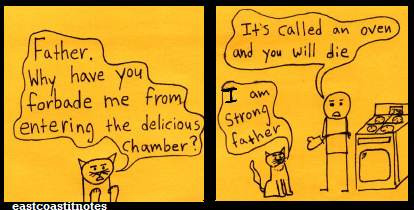
I love irregular conjugations in English, and I’m torn between being excited to see “forbade” in the wild and sad because it’s used for the perfect form, instead of the preterite.
To be fair, this shows an impressive improvement in cats’ understanding of grammar since the start of internet memes. Remember when they used to ask, “Can I haz cheezburger?” At this rate, they’ll soon speak better English than all of us.
I love memes that still would have been bangers 3000 years ago
If your oven is delicious, clean it.
Or it is delicious because food comes out of it. 😼
Why do they call it oven when you of in the cold food of out hot eat the food?
I think I get what you’re going for, but that sentence hurt my brain.
Then the food is what’s delicious, not the oven. The oven is only delicious if the food failed to come out of it.
We’re arguing about cat perception here?
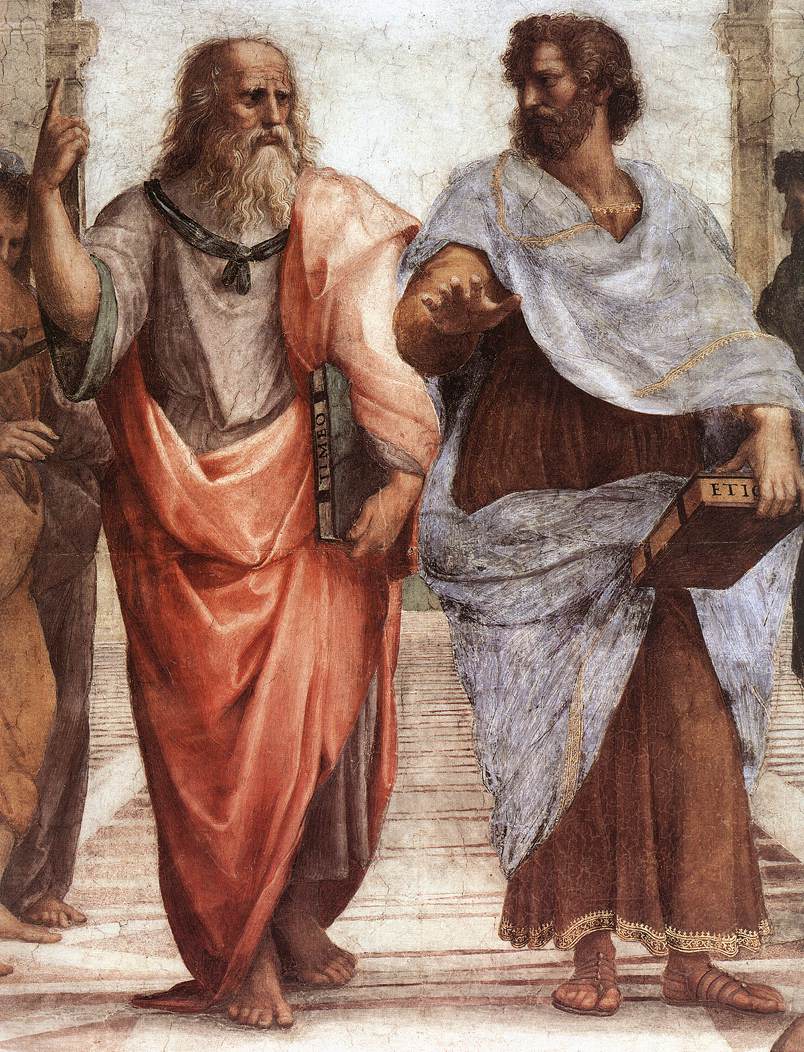

It’s a real book!
Synopsis
The author of Straw Dogs, famous for his provocative critiques of scientific hubris and the delusions of progress and humanism, turns his attention to cats–and what they reveal about humans’ torturous relationship to the world and to themselves. The history of philosophy has been a predictably tragic or comical succession of palliatives for human disquiet. Thinkers from Spinoza to Berdyaev have pursued the perennial questions of how to be happy, how to be good, how to be loved, and how to live in a world of change and loss. But perhaps we can learn more from cats–the animal that has most captured our imagination–than from the great thinkers of the world. In Feline Philosophy, the philosopher John Gray discovers in cats a way of living that is unburdened by anxiety and self-consciousness, showing how they embody answers to the big questions of love and attachment, mortality, morality, and the Self: Montaigne’s house cat, whose un-examined life may have been the one worth living; Meo, the Vietnam War survivor with an unshakable capacity for “fearless joy”; and Colette’s Saha, the feline heroine of her subversive short story “The Cat”, a parable about the pitfalls of human jealousy. Exploring the nature of cats, and what we can learn from it, Gray offers a profound, thought-provoking meditation on the follies of human exceptionalism and our fundamentally vulnerable and lonely condition. He charts a path toward a life without illusions and delusions, revealing how we can endure both crisis and transformation, and adapt to a changed scene, as cats have always done.
He actually used a different cover:

The food is currently in the oven, therefore the oven is the “delicious chamber” because from the cat’s perspective, it is the chamber that houses the deliciousness. What is so hard to get about that?
You’re reasoning with a cat 😹
The cat wants to go in because it smells food. It smells food because the residue hasn’t been cleaned.
Or because there’s food cooking in there
The cheddar cheese caves are not literally made of cheese. They are where cheese was traditionally made.
The heat from the oven is what makes it delicious, its not a binary situation.
You would prefer The Chamber Of Delicious?
Also, the oven mitt signifies that the delicious food is currently within the chamber becoming hotter and more delicious. Possibly spattering on the inside of the chamber.
delicious chamber
The chamber is delicious. A chamber is an enclosed space. The chamber has enclosed the delicious.
Also, man is wearing an oven mit. The chamber is currently enclosing the delicious.
Why would you ruin its seasoning?
Cast iron pans are supposed to have seasoning. Appliances are not.
counterpoint: no.
What do you have against there being joy in the world?
That was really good lol