As someone that used to buy produce wholesale at the same warehouse that several local supermarkets did, you have no idea how much produce is marked up for retail. None at all.
I suppose there’s a big markup to account for what they’ll end up throwing out, and then the high price is part of why there’s so much unsold and needing to be disposed of.
a lot of that ugly produce is what goes into canning and pre-made products.
This is just supposition on my part based on personal experience, but it seems ever since the tariff bullshit started, the availability of quality produce has crashed for me in america, and not only are the “ugly” ones ending up on shelves now, but even damaged ones. . as if theres not enough produce coming in to to allow stores to be selective on what appears on shelves vs what goes into canning/etc.
I’ve noticed potatos are smaller, often heavily blemished, meaning I might get 2/3rds of a the weight of edible potato with 1/3rd going to scrap because of damage/etc.
Tomatos too, tend to be smaller, often bruised, and i’ve found rot inside more tomtatos since tariff bullshit started, than in all the decades before.
Carrots are thin, spindly, and barely have any crunch to them.
Lettuce is now giving everyone Trumparrhea
Onions, even worse than potatos, are blemished or mouldy, and I might be lucky to get half a pound of edible onion for every pound I buy.
and its same with everything else I’ve not mentioned in the produce section.
I imagine some of this may be regional as well, so that people on the opposite side of the country from me might not have the same experience.
A lot of produce goes bad as well. They regularly throw out a lot of it (unfortunately much of it into bins, but I guess there’s a food safety issue with giving it to homeless people).
Grocery stores in my country are operating on a 2-5% profit margin. All companies’ annual reports are public and shareholders can’t take dividends unless there’s profit AND there’s no tax on profit, only on dividends, so there’s little incentive to hide profits. And no, grocery prices aren’t cheap here either, they’re up a lot in the last 6 years and change.
If Mamdani could cut costs 30%, either the stores aren’t turning a profit (which they don’t need to since they’re being run for the benefit of New Yorkers), or Americans have it much worse in terms of price gouging. I suspect it might be the latter if there aren’t as many competing chains in the US. Here we’ve got 3-4 even in many small towns, 6-7 in the cities, and of course small independent ones in some places. And one of them is a co-op. But I’d still expect NYC in particular to have healthy competition, it’s such a huge market and so dense, room for a lot of competing stores.
Where the markup is criminal IMO is nonperishable goods. Fucking regular pens with a 300% markup in office supply stores, etc. Stuff they don’t have to throw out after a few days.


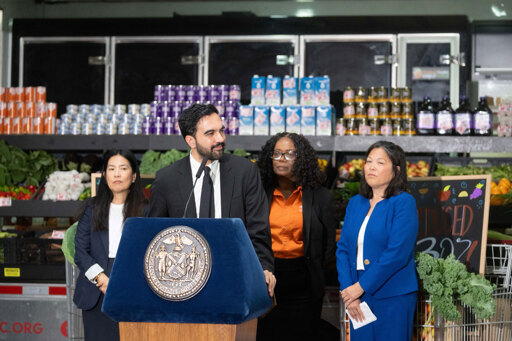
As someone that used to buy produce wholesale at the same warehouse that several local supermarkets did, you have no idea how much produce is marked up for retail. None at all.
I suppose there’s a big markup to account for what they’ll end up throwing out, and then the high price is part of why there’s so much unsold and needing to be disposed of.
A ton of produce looks unappetizing, goes bad and has to be thrown out.
a lot of that ugly produce is what goes into canning and pre-made products.
This is just supposition on my part based on personal experience, but it seems ever since the tariff bullshit started, the availability of quality produce has crashed for me in america, and not only are the “ugly” ones ending up on shelves now, but even damaged ones. . as if theres not enough produce coming in to to allow stores to be selective on what appears on shelves vs what goes into canning/etc.
I’ve noticed potatos are smaller, often heavily blemished, meaning I might get 2/3rds of a the weight of edible potato with 1/3rd going to scrap because of damage/etc.
Tomatos too, tend to be smaller, often bruised, and i’ve found rot inside more tomtatos since tariff bullshit started, than in all the decades before.
Carrots are thin, spindly, and barely have any crunch to them.
Lettuce is now giving everyone Trumparrhea
Onions, even worse than potatos, are blemished or mouldy, and I might be lucky to get half a pound of edible onion for every pound I buy.
and its same with everything else I’ve not mentioned in the produce section.
I imagine some of this may be regional as well, so that people on the opposite side of the country from me might not have the same experience.
I often go for the “ugly” produce, because i know others won’t. if it saves a bit of waste, then why not. Not like it tastes any differently.
Everything is marked up crazy compared to its wholesale producer pricing
Everything is marked up for retail. Anything you buy in a mall is at least 200%.
A lot of produce goes bad as well. They regularly throw out a lot of it (unfortunately much of it into bins, but I guess there’s a food safety issue with giving it to homeless people).
Grocery stores in my country are operating on a 2-5% profit margin. All companies’ annual reports are public and shareholders can’t take dividends unless there’s profit AND there’s no tax on profit, only on dividends, so there’s little incentive to hide profits. And no, grocery prices aren’t cheap here either, they’re up a lot in the last 6 years and change.
If Mamdani could cut costs 30%, either the stores aren’t turning a profit (which they don’t need to since they’re being run for the benefit of New Yorkers), or Americans have it much worse in terms of price gouging. I suspect it might be the latter if there aren’t as many competing chains in the US. Here we’ve got 3-4 even in many small towns, 6-7 in the cities, and of course small independent ones in some places. And one of them is a co-op. But I’d still expect NYC in particular to have healthy competition, it’s such a huge market and so dense, room for a lot of competing stores.
Where the markup is criminal IMO is nonperishable goods. Fucking regular pens with a 300% markup in office supply stores, etc. Stuff they don’t have to throw out after a few days.