Ok, that’s an excellent sentiment, but utterly worthless in the real world. People will buy what is available and what is cheap. A handful of people choosing to be conscious with what they purchase is a drop in the bucket compared to what the masses will do.
I get it. Convincing the people to not buy stuff that pollutes should be the easy route, but it’s not. And unfortunately we don’t live in the world of “it should be this way”, we live in reality. And in reality, the only real way to stop pollution heavy products from being sold is to go after the companies making them directly. Boycotts alone will not work because, again, as long as the products are available and cheap, people will buy them; morals be damned.
Unfortunately, convincing corporations to not pollute isn’t any easier. Using the tools of government to regulate them even harder still. It all comes down to people and what they want. Try to circumvent them and they’ll fight back.
Just look at what’s happening right now. Trump is rolling back tons of environmental and agricultural (anti- animal cruelty) regulations all the time. What activists had counted as previous wins are now going away.
Government reforms are still more effective than anything else we’ve tried. By focusing on individual reform, you’re playing right into the hands of the 1%. There’s even a book about it!
You can’t enact government reforms without winning an election, and to do that you need to convince individual voters. But then if you enact your reforms without a strong mandate, those reforms will be gone next election.
Anyway, that book is about nudge theory which is NOT what I’m arguing for. I already knew that bit of pop psychology was BS years ago.

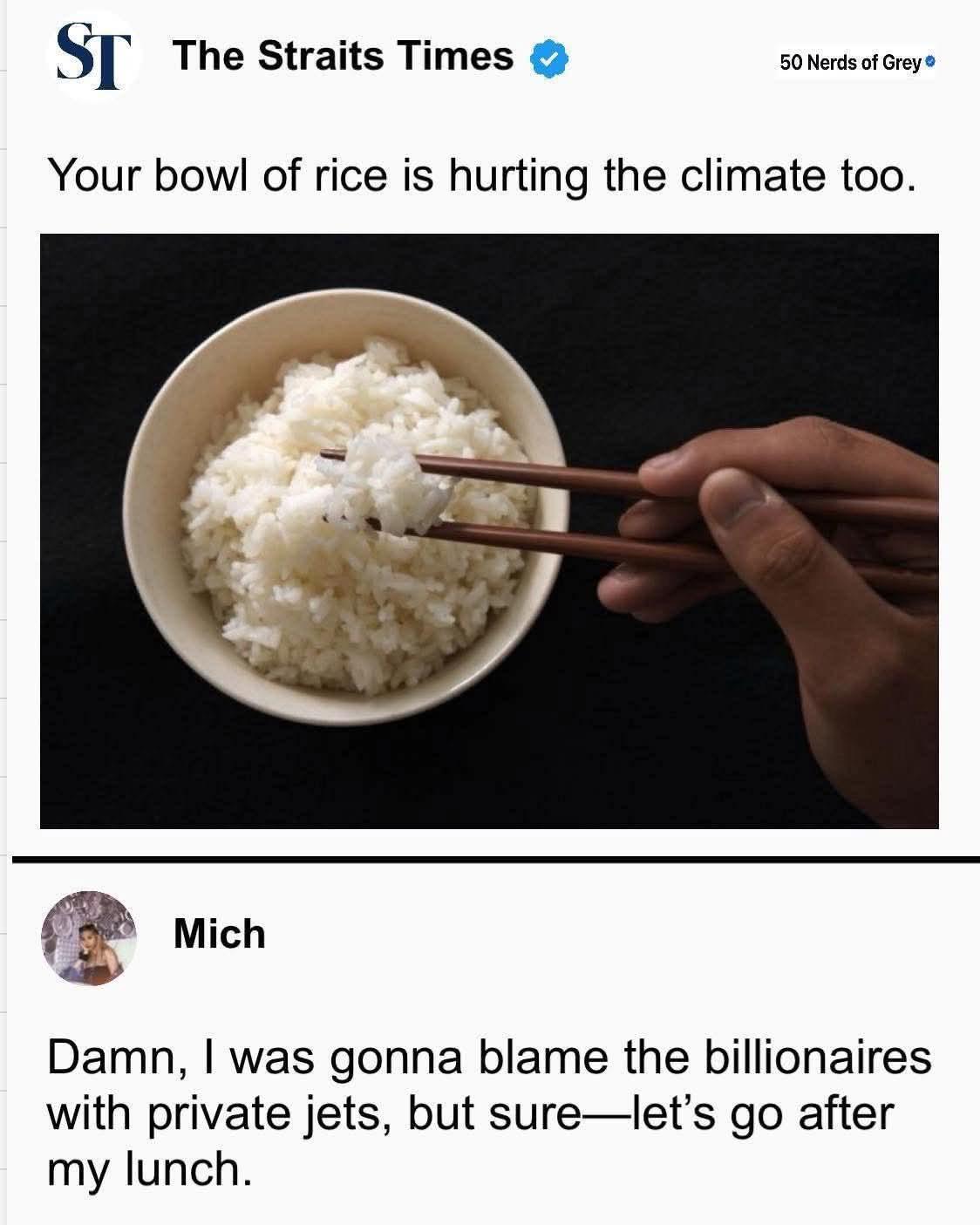
Ok, that’s an excellent sentiment, but utterly worthless in the real world. People will buy what is available and what is cheap. A handful of people choosing to be conscious with what they purchase is a drop in the bucket compared to what the masses will do.
I get it. Convincing the people to not buy stuff that pollutes should be the easy route, but it’s not. And unfortunately we don’t live in the world of “it should be this way”, we live in reality. And in reality, the only real way to stop pollution heavy products from being sold is to go after the companies making them directly. Boycotts alone will not work because, again, as long as the products are available and cheap, people will buy them; morals be damned.
Not always. I’ve always tried to buy what is better for the planet, even if that costs a bit more. Or will repair stuff instead of toss and buy.
There are dozens of us 😀
Unfortunately, convincing corporations to not pollute isn’t any easier. Using the tools of government to regulate them even harder still. It all comes down to people and what they want. Try to circumvent them and they’ll fight back.
Just look at what’s happening right now. Trump is rolling back tons of environmental and agricultural (anti- animal cruelty) regulations all the time. What activists had counted as previous wins are now going away.
Oh bullshit. Governance can absolutely compel industry to reform.
And political movements can undo government reforms, as we’re seeing right now.
Government reforms are still more effective than anything else we’ve tried. By focusing on individual reform, you’re playing right into the hands of the 1%. There’s even a book about it!
You can’t enact government reforms without winning an election, and to do that you need to convince individual voters. But then if you enact your reforms without a strong mandate, those reforms will be gone next election.
Anyway, that book is about nudge theory which is NOT what I’m arguing for. I already knew that bit of pop psychology was BS years ago.