

- cross-posted to:
- memes@lemmy.world
- lemmyshitpost@lemmy.world
- politicalmemes@lemmy.world
- cross-posted to:
- memes@lemmy.world
- lemmyshitpost@lemmy.world
- politicalmemes@lemmy.world
cross-posted from: https://quokk.au/c/fuckcars/p/550765/meme-choochoo
You must log in or # to comment.
Downvoting because this doesn’t really have anything to do with science. Also because it isn’t funny. I support the message, though
The connection to science isn’t explicit, but there’s definitely an implicit connection. There’s the engineering it would take to design efficient rail systems and modern locomotives, there’s the calculation of relative emissions cost compared to reliance on automobiles, and all the science on the impacts of those emissions, the calculated benefit of converting infrastructure to rail-based, etc.
It doesn’t out and say it, but anyone with the basic knowledge should be able to draw the connection.
Science != Engineering
It’s not equal to engineering, but it’s certainly involved in it.
That’s like saying x ≠ x²+3x+b
Of course it’s not equal to it (unless x and b both equal zero)
You could say the same thing about a picture of a cow with the text “Cows have feelings. Stop killing cows.” Yes, science can validate that cows have feelings, and it can discuss the ways in which animal agriculture contributes to climate change. But we could all tell that the poster has less interest in making jokes about science, and more interest in spreading heavy-handed vegan propaganda.
And again, I personally am in favor of reforming urban design to lessen our reliance on personal automobiles (though I will note that, contrary to the emphasis of the meme, the more research-supported position is that the primary transportation alternative to cars needs to be walking, not trains). But this meme is clearly not a science meme.
Also, it isn’t funny. So I like it even less, because I think getting people on board with improved urban environments starts with being likeable - not whiny.
Valid. Although,
contrary to the emphasis of the meme, the more research-supported position is that the primary transportation alternative to cars needs to be walking, not trains
The thing is, rail-based infrastructure encourages walking. If you’re only going a should distance, you walk a few blocks instead of driving. If you’re going further, you walk to the station, and then to your destination.
Walking is not an option over a certain distance. Unless you want to spend all day getting somewhere you could have gone in less than an hour, and a multiple days journey to get places farther.
Walking alone will never replace reliance on cars until there’s a viable alternative, and trains are the best option. Especially if they’re designed efficiently and use renewable energy
Certainly trains will play a part in a transition away from auto oriented transport systems. But my point is that walking needs to be primary. Every few years the train boosters will say that, for example, a high speed rail project connecting two cities will reduce auto congestion and car dependency. And then it ends up a severely underutilized boondoggle, because the two cities it connects are still auto oriented.
If you have two places that are already pedestrian friendly and which have a high volume of traffic between them, by all means, build a train. But a train that only has stops in a sea of parking lots is not a reasonable infrastructure investment. The surrounding environment must be reformed before the train will see significant use.
That’s why it needs to be a comprehensive system. Connecting unwalkable cities by long distance, high speed trains wouldn’t be enough to effect the cultural shift necessary, no. But I didn’t say that alone would be enough.
Intercity rail is just one aspect of a comprehensive rail system, which must also include intracity railway infrastructure such as a well-planned metro system. And ideally some local routes that connect outlying suburbs into the main rail network.
All of this is necessary to reduce dependence on automobiles, and to reduce the overall picture to one of its aspects and say that part alone wouldn’t be enough to achieve the goal is honestly not a very good argument.
Edit for context:
I didn’t realize this comment was in a different chain from this one: https://sopuli.xyz/comment/21297827
Again, I don’t disagree with anything you are saying here. Yes, to overcome auto dependency, we need intercity rail, and yes, we also need intracity transit in the form of busses and trams, etc.
My point is that people overemphasize the importance of large scale transit projects like these for reducing auto dependency, when the most important thing is walkability. Again, you can fill a city with trams and brt lines, but if the city isn’t walkable, no one (or, very few) will use them.
As an example. I am currently living on the outskirts of a small town in Mexico for the winter with a small comminity of other anglophones. Where I am living, our little expat community is able to support a few restaurants, bars, and tightly packed residential communities. About twice per week, I will carpool into the town proper to get some groceries or other supplies and enjoy some of the local life and culture. So in a typical week, I make a total of 2 car trips. I can contrast this with my life in my hometown in the united states, where I would make up to 10 car trips per day in my auto oriented city, going to work, groceries, restaurants, stores, entertainment venues, or friends’ homes. Supposing I average 5 car trips per day in the United States, that is 35 car trips per week. Reducing from 35 car trips per week to 2 is a 95% decrease in auto use. And I do this with not a single thought for reducing my auto dependency or saving the planet - I just do it because the area is walkable, and it is more convenient to walk to places than to drive.
This is why walking should be regarded as the primary mode of transportation that urban reformers should strive for. 90% of car trips in auto oriented areas are made for the hum-drum reasons of daily life - the grocery store, the hardware store, getting the kids from day care, getting a quick meal when you don’t have time to cook, going to the gym, etc. If these things are conveniently within walking distance of peoples’ homes, then they will walk, saving all those car trips. Maybe transit in their city is still sub-par, so they still drive to work every day - they will still significantly reduce their auto use if the area the live in is walkable, and will reduce it more if the area they work in is also walkable. And then, if both home and work are walkable, they will consider the option of taking fast and convenient transit between them.
That raises another issue which is zoning laws. I addressed that in my other comment too.
Other countries have mixed-use zoning. You can have commercial and residential buildings in the same space. You can even build apartments above restaurants.
In the US, hardly any neighborhood has any businesses within walking distance, and the ones that do usually have a sketchy walk on the side of the road with no sidewalk, and everyone who sees you thinks you’re a junky because “who else would be walking there?”
And then all the businesses are packed into ugly strip malls surrounded by giant parking lots. It’s not an efficient use of space.
In my linked comment, I explained how cultures built around rail systems have mixed-use zoning and less need for parking lots; allowing towns to be built more densely around stations, and contributing to walkability.
Yes, it’s challenging to convert a disperse infrastructure that’s been built around roads and highways into one that’s as efficient and walkable as a rail-based society. I’m not denying that.
I suppose the disconnect is that you’re viewing walkability and railway infrastructure as separate things, and I view them as intrinsically connected. A rail-based infrastructure is inherently more walkable; and a road-based infrastructure is inherently less walkable.
You could say the same thing about a picture of a cow with the text “Cows have feelings. Stop killing cows.”
Yes, you could.
heavy-handed vegan propaganda
No such thing, only carnists desperate not to acknowledge their unethical behavior.
I don’t think carnists are desperate, they just don’t care. They don’t view it as unethical.
You can try explaining to someone the harms of the meat industry from an environmental standpoint, an animal rights standpoint, a food security standpoint, a worker’s rights standpoint, and some may be amenable with the right amount of convincing.
But trying to bludgeon someone into compliance through shaming and demanding them to change is heavy-handed. And especially when carnists are in the majority, it’s not likely to be effective either
as a full time carnist - I’m not desperate, I don’t see it as unethical, It’s not that I don’t care about science and health but the data I’ve found does not support the plant based movement, I’m open to new data but not propaganda or low hazard ratio epidemiology
I’m curious what data you’ve found that doesn’t support the plant-based movement. Water consumption, the amount of grain it takes to produce a fraction of its weight in meat, methane emissions from factory farming, etc., all point to the need to at the very least reduce the scale at which meat is being produced
I’m just coming at it from the health aspects.
As for the other aspects - the ruminate methane cycle is a historic and carbon sequestration positive cycle. Factory farms are unsustainable but ruminants are a necessary part of soil health and in their natural pastoral setting are not a source of ecosystem harm… in factory farms I also include industrial plant agriculture too, importing fertilizer and soil destroying monocropping isn’t sustainable.
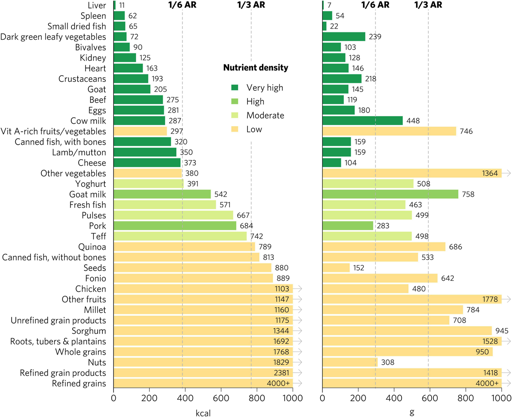
The kg of grain needed to equate a kg of meat in nutritional value comparisons are crazy! https://hackertalks.com/post/5606539 i.e. if you wanted to eat 100% of the daily recommend nutrition intake eating only Liver - you would need to eat 21g (0.7oz). But with refined grains you would need to eat over 12,000g(26lbs) per day… - These numbers are based on absorption into humans and not raw values measured in the food
chart
In advanced countries the public transport isn’t a problem, only the USA is 50 years behind.
Railway map EU vs USA

Excuse me statesia isn’t 50 years behind. 50 years ago we were better. We’re more like 200 years behind.
Well, the US was always a third world country with too much money and weapons.
That’s very offensive to third world countries.
Ok, true, much third world countries treat its people.way better
Can they run 24 hours too? I can’t tell you how fucking annoying it is doing something fun with friends that goes late and have to leave at god damn 11pm or some shit so I can catch the last fucking train for the night or have to sleep over. Also cars specifically for people who need to move large objects or all their worldly possessions or something.
Yeah sure they can. The main train line near me runs 24/7.
In Britain, that’s the knock-on effect of two world wars thrashing the infrastructure, and 50 years of managed decline afterwards. Engineering needs to be done, and it’s nights, weekends and holidays.
This is already the case in many places where it’s possible. It would be a huge waste of resources though, in places that are thinly populated.
That’s weird. I thought it was everyone driving their own cars all the time that was a huge waste of resources.
With work hours being what they are, you don’t have set times where everyone needs to be at work or go home at the same time. It rural areas, having public transport so often that “you don’t need to check a schedule” would mean empty busses and trails most of the time.
For me, I can tell that I have lived in a city where this was the case. It was great! But where I live now, this isn’t possible. The narrative now is, that people should move into towns, to make this more effective. There is a very fine balance between effectiveness though, and industrialization of living conditions.
Do you know how many cities are out there that have completely useless public transit? I don’t think anyone’s suggesting we build a train out to every farmer’s front door so they can get into town without a car.
There’s plenty of areas where additional bus routes and train lines would be a huge benefit, but the entire budget is being spent on car infrastructure.
(Like the Premier of Ontario who wants to build a tunnel for cars under Toronto instead of finishing the light rail projects that have been under construction for over a decade)I mean, you are correct that building an entire rail line to a single farm to take the farmer’s kids to school would be extremely inefficient. We need farms, and farmers, and those farmers need to be able to get around, and the way for them to get around is personal automobiles.
But the argument “farmers need cars so we still need cars” is not really an argument in favor of auto-intensive infrastructure. It is a edge case, and we should design cities around the needs of the average person and make allowances for edge cases, not the other way around.
The meme is specifically about cities, so when you said “thinly populated,” that should have been about thinly populated areas of cities.
If you’re actually talking about rural areas and not cities, then you’d want to start with buses. Speaking of living in places with good public transit, I used to live in Japan, and I was surprised by how much buses get used in rural areas. They can get pretty full.
You can get almost anywhere by train in Japan. And anywhere you can’t get by train, you can get by bus. It’s lovely.
Yeah, they put busses into my exurb and they hardly have anyone riding them because they just connect one shopping center to a different shopping center to the library to the bus depot to &c. (never any residential). Only busses that stop in residential are schoolbusses. Now they wonder why no one uses the local bus. Or not.
The thing is, with public planning, zoning laws etc. you can make it possible. People generally move to where the jobs are, and that tends to be cities. It’s basically why Spain’s population is so concentrated in the cities, much more so than in other similarly-sized european countries. In the US, zoning laws were a huge part of how it became so car-reliant, too.
Efficient planning could overcome that. A central hub with lines going to every other major hub nearby would be enough to connect all the cities. Then each route can run “express” services that only stop at major stations along the way, and “local” services, which stop at every small station. That way people can travel faster between hubs, while stilling giving access to less populated areas.
A few transcontinental lines for high-speed trains, and some major north-south routes as well, make public transit a viable optipn for long-distance travel.
Each city having its own metro system would make intracity public transit a viable option, reducing the need for cars and therefore reducing traffic congestion, simultaneously making it possible to make neighborhoods more walkable. A few spoke-shaped lines to reach out to surrounding suburbs, and loop-shaped lines to connect the outskirts without having to tranfer at the central hub.
Then all you need is a few well-planned bus routes to connect suburban areas to nearby stations. The only ones this leaves out are rural areas, who would still depend on cars, but that’s a much smaller portion of the population. Eliminating the need for a car in urban and suburban areas would go a long way towards reducing congestion and pollution.
Lots of places already have good public transportation systems, because they were built around the premise of using trains as a main mode of transport. Suburbs are built around train stations. Mixed-use zoning allows for as many residences as possible to be constructed within walking distance of a train station. And since there’s less need for parking lots, they can be built more densely to avoid wasting space.
The car lobby in the USA did a lot of damage, and now it would be costly to convert the infrastructure. But long term, it would be a worthwhile investment.
90% of the US has none of that. Nothing walkable. No trains. No buses. No sidewalks. I’ve lived in places with transportation pretty decent, but the only option where I live currently is cars. We are generations away from what you’re describing. Making cars more expensive isn’t accelerating the development of alternatives, it’s only making people suffer and more and more angry.
Yes, I know that. I’m identifying that as a problem, but I never said a solution would be quick or easy. I’m fairly certain I even said that US infrastructure is built in a way that would make it more difficult, as compared to societies that are built upon rail-based systems.
When did I ever say anything about making cars more expensive? What is it with Lemmy comments and making strawman arguments?
-User posts in-depth explanation of how to build out public transit
-“Well we don’t have it NOW so you’re hurting farmers!!!1!”
Yeah but have you considered auto makers profits??? Didn’t think so. /s
I want teleporters so I can roll out of bed, shit on the floor and it goes straight to the compost, take a shower, mid shower grab some coffee from the good coffee shop, fart my way to work which is halfway across the globe and takes a hop skip and telejump to get to. I have dinner in Moosejaw and dessert in Ayacucho. I go to sleep in Rwanda and wake in Borneo. I really should do less drugs. Or more drugs. I can’t remember anymore. So it looks like more drugs.
Very real
US: “Too bad”
deleted by creator
Plenty of European cities were built walkable and with public transit because they were made before there were cars. And then we half-demolished them to make room for cars, and THEN/now we spent decades fixing the shit we broke to make room for cars.
deleted by creator
Removed by mod
deleted by creator
costing a lot more than just driving myself.
Did you include the cost of buying and maintaining a car? Or is that just fuel costs?
deleted by creator
That’s an INSANE cost.
I can take the sleeper train Amsterdam-Vienna for 115 euros one way, that’s 1100km by car. 130 euros will get me on a non-sleeper train to Budapest AND back. I tried my best to find a 180 euro train ticket, but couldn’t.
So, reason you hate the train is because the trains there suck.
deleted by creator







![[meme] choochoo](https://quokk.au/static/media/posts/8L/4e/8L4eFCNmnx9NzyK.webp)