

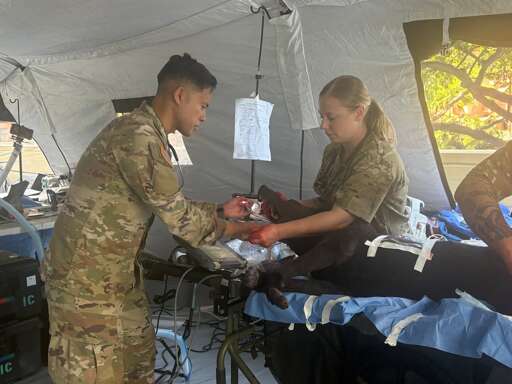
In an effort to mitigate logistical issues that accompany large-scale combat operations, the U.S. Army is working to better integrate veterinarians into combat care.
To better prepare for the possibility of a large injury rate in a future Indo-Pacific fight, combat medical teams are working on ways to utilize human and animal health at the same time, given the similar anatomies between humans and canines, as demonstrated by the 18th Theater Medical Command at the 2026 Land Forces of the Pacific Symposium and Exposition in Hawaii.
Cutbacks in medical care for our troops is the new hotness at the pentagon.
We saw cutbacks to health care in general for the troops a few days ago: https://abcnews.com/US/army-cuts-dozens-medical-training-courses-amid-funding/story?id=133192487
Republicans must be so proud.
They’ve got to pinch as many pennies as possible in order to cover all the new AI costs
This isn’t crazy. A vet would automatically be better educated than any paramedic, and the quick and dirty procedures at the front are not meant to replace a surgeon, but rather to keep you alive long enough to reach one.
My brother in-law was a vet and he used to say human doctors have it easy - they only have to learn one animal.
They also don’t have to worry so much about being bitten on a daily basis
Unless they reside in Florida. Perhaps Philly
Conscription incoming
Veterinary Veterans
Vet-vets. Dou-vets? Dubvets.
I can see they would be far better at stitching than people doctor though
Seems fine on the face of it, a vet would be better trained than a standard medic, and probably better at the kind of quick and dirty “make it work” combat care that you need to get back to a full surgeon. Improvising tools for non-standard uses is kind of their whole bread and butter, and patching up a bullet hole is the same regardless of if its in a dog or a person, at least for first-touch care.
The biggest issue I see is that the Army already has trouble getting good, well trained people, and they want to add more attempts?
So “standard medic” is our bar? Veterinarians are better trained to handle a wide variety of animals, at the cost of specializing heavily in human care. Nothing is free in life, and all that time studying cats, dogs, reptiles and fish does in any way make them a better human doctor.
DA FuQ???

