-
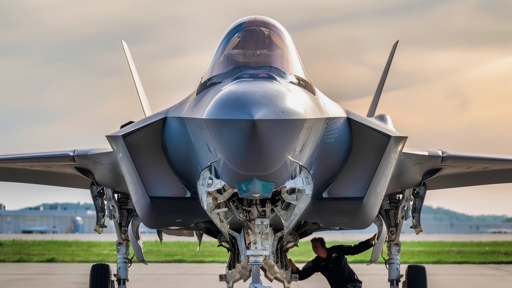
European nations and Canada are “pushing away” from the F-35, motivated by a desire for “strategic autonomy” and political friction with the Trump administration
-
Spain officially canceled its F-35 purchase in August 2025, opting for European-built alternatives. Switzerland is now also reviewing its 36-jet deal after being hit with a “shocking” $1.3 billion price hike and new 39% U.S. tariffs, and recent reports suggest that Portugal has not opted to purchase the U.S. jets
-
Instead of the F-35, they are increasingly looking to European alternatives, such as the Eurofighter Typhoon and the Future Combat Air System (FCAS).
-
Canada’s 88-jet deal is also in “limbo,” as PM Mark Carney, angered by Trump’s “51st state” comments and trade disputes, ordered a review of the 72 un-committed jets
-
Technological and industrial sovereignty are significant reasons why some countries are opting not to purchase the F-35. Some European nations prioritize developing their own defense industries and technological bases. Buying American-made F-35s would make them dependent on US supply chains and could suppress the development of their own next-generation aircraft programs. …
I won’t trust Carney to fully scrap the deal after his embarrassing apology for the Ford ad last week. Keeping it in the maybe pile is more helpful for negotiation even though we would be better off with Typhoons or Gripens.
Ideally we would want a couple F-35s anyways, to dissect
Why spend the money? Just wait for a leak on the War Thunder forums.
Fucking finally!
I think as of now RCAF still wants them and the deal isn’t off yet. I imagine it’s also a card that’s used in the negotiations with the US. I wouldn’t be surprised if we end up staying with the F35s.
It’s understandable that the RCAF still wants it; There’s literally no other option with the same capabilities. The Gripen is an excellent plane, but it’s not a fifth gen fighter. Unless we want to start buying planes from China, we’re SOL if we want another fifth gen option. I’m not personally advocating to continue with the purchase, I think we should go ahead and build the Gripen here in Canada and use that as a stopgap while we get on board with one of the European sixth gen fighter programs. But I can absolutely see why the RCAF doesn’t feel the same way. They’re a small air force and they need every advantage they can get. Based on its performance against F-16s I have no doubt the Gripen could shoot down Russian fighters at a ten to one rate, but I also have no doubt that the F-35 would be closer to a hundred to one rate (in Fermi approximation terms), and one could certainly argue that we need that if we end up on the front lines of a war with Russia.
I still lean towards the Gripen, but I’ll admit I go back and forth on this. It’s not a cut and dry decision either way.
Most people don’t really understand the problem. It’s either make a deal with an ally run by lunatics, or suffer a decade long capability gap that your military may not be able to overcome.
There are no other 5th gen options, and 4++ are becoming more vulnerable with the proliferation of effective air defense. The first available 6th gen outside of US export controls will be on the wrong side of 2030.
This is an incredibly difficult choice for Canada with no perfect options.
Both China and Russia are expanding their arctic presence. The US is electing nationalist demagogues on a platform of betraying our allies. It’s possible Canada may have a peer to peer conflict in the next 5 to 10 years. Canada possibly can’t afford that big of a capability gap if that’s the case.
You’ve hit the nail on the head here.
I don’t know what the right answer is on this one. On balance, I lean towards getting the Gripen as a stopgap and prioritizing access to those European sixth gen projects. Select the one that looks the best suited for our needs and go in hard on collaborating on it.
This is part of why I think the Gripen makes sense; we can build it here, which opens up the possibility of being able to build a sixth gen later, instead of having to wait in line for our order to ship. The F-35 gives us better capabilities now, but doesn’t solve the underlying problems down the road.
There is, I think, a version of events where we sign a deal with Saab to build Gripens in Canada to export to buyers like Ukraine, and then go ahead and take the F-35 order anyway. Most likely, we use this to extract concessions in other areas from the Americans, pointing at our new domestic fighter plane industry as a very credible threat to walk away from the F-35 deal. Then, if we’re smart about this, we continue to build up our ability to domestically produce fighter craft, with an eye on that sixth gen project. This would make a lot of sense in the context of Carney’s stated goal of making Canada a defence supplier to the EU, while still leaving us with an interim platform that can handle anything the Russians throw at us.
I agree, I think that’s a likely route for Canada. A small F-35 order, supplemented by continually upgraded 4++ aircraft that can be built in country is a good strategy to mitigate all risk factors. It doesn’t give Canada the best option for really any scenario, but it gives them a good option for every one. With loyal wingman aircraft, and drones proliferating in general. Its likely 4 gen aircraft will have more usable roles countering and supplementing new air tactics as nations adapt to technologies. So even if 4 gen aircraft lose the ability to be front line strike and intercepter aircraft, they likely can still be productive members of the system. Saab commitment to the Gripen platform likely means Canada can continue integrating high level electronics for a long time. With proper investment in air defense systems, I think this strategy could get Canada to a 6th gen replacement from Europe while still maintaining a credible deterrent posture.
I’m curious what countries like Spain, Italy, and the UK will do. They all have smaller aircraft carriers that require short takeoff / vertical landing planes, a role currently being filled by the F-35B. I’m unaware of anything similar from other western aircraft manufacturers.
There’s nothing similar stealth-wise, either, at least for that kind of aircraft.
It’s a really really good plane, like you’d expect from however many trillions spent in project money. It’s just that the Americans control the software running on it.
It’s a huge problem. There is no other fifth gen option available to NATO. The Gripen is one of the best choices out there, and it does have a lot of stealth and EWAR capabilities that other fighters lack, as well as really impressive radar, but that’s not the same thing as the kind of stealth that the F-35 and F-22 have.
On the other hand, I can absolutely see how the F-35 now presents an unacceptable security risk.
The good news is that Russia has nothing even close to the F-35, and its honestly unlikely that most of their stuff can even stand up to the Gripen. Their purported fifth gen fighter just isn’t. It has a radar cross section over a thousand times larger than that of any US fifth gen, that’s according to Russia’s bullshit propaganda numbers. And they’ve only made about 6 of those. The rest of their fleet is slightly upgraded cold war surplus, maybe at the level of the F-16 if you’re being really generous, and the Gripen wipes the floor with the F-16 in combat testing (Gripen pilots shoot down F-16s at a ten to one ratio IIRC).
If we assume that Russia is the main threat, then the Gripen will serve very well for now (at least for Canada, with no need for a carrier launch capability) until we can get a sixth gen fighter; Europe has two such projects in the works. If we assume the main threat is the US, then the F-35 would still be a bad idea, since even putting aside any issues with supply of firmware, they would know its capabilities and weaknesses intimately. China is the wildcard and we just don’t know what the capabilities of their craft are. OTOH its extremely unlikely that there would be a conflict with China that didn’t involve the US as the primary combatant, so I think that’s less of a concern for the rest of NATO.
There is no other fifth gen option available to NATO.
I’m nitpicking a bit, but like you mentioned, China and Russia have limitations. I don’t really buy that the J-20 is on the same level, and the Russian thing is an actual joke. So, “to anyone”.
The Gripen is one of the best choices out there, and it does have a lot of stealth and EWAR capabilities that other fighters lack
EWAR sure, but it’s totally unstealthy AFAIK. Survivability would depend on hitting something, landing in a field and getting back onto a truck before a counterattack can arrive. Which works for SAM units and artillery, I guess.
Which, maybe we should just invest in SAM units and sensors, honestly, if we’re worried about a hostile US. I’m guessing it’s a lot more cost effective, and would be nearly as effective early in a defencive conflict. The other medium-term option would be a jailbroken F-35 of some kind, but that’s only possible once the alliance is well and truly dead (all the physical parts are available from somewhere else).
I would trust a Chinese made fighter jet before I would trust an American one.
And that’s saying something.