You believe in an authoritarian state. Yes it would be authoritarian if you install a dictator. It doesn’t matter how communist the state is. Like, that’s your whole mo.
In post-Soviet Russia and other post-Communist states, neoliberal reforms based on the Washington Consensus resulted in a surge in excess mortality and decreasing life expectancy, along with rising economic inequality, corruption, and poverty.
The Russian government believed that the open sale of state-owned assets, as opposed to the voucher program, would have likely resulted in the further concentration of ownership among the Russian mafia and the nomenklatura, which they sought to avoid. Nevertheless, contrary to the government’s expectations, insiders managed to acquire control over most of the assets, which remained largely dependent on government support for years to come.
Because most people were not well-informed about the nature of the program or were very poor, they were quick to sell their vouchers for money, unprepared or unwilling to invest.[18] Most vouchers—and, hence, most shares—wound up being acquired by the management of the enterprises. Although Russia’s initial privatization legislation attracted widespread popular support given its promise to distribute the national wealth among the general public and ordinary employees of the privatized enterprises, eventually the public felt deceived, with most people selling their vouchers to survive the economic collapse following the soviet dissolution.
I don’t understand your point. The process of privatization had terrible results. It was managed by pro-capitalists and facilitated the corruption and rise in mafia power.
In the months before the dissolution of the Soviet Union in December 1991, soon-to-be president Boris Yeltsin began assembling a team of economic reformers led by Yegor Gaidar, then a young reformist economist, and including Anatoly Chubais. The reform team initially considered Swedish social democracy as a model for Russia, but Gaidar opted instead to study Hungary as a template and was influenced by Poland’s use of shock therapy. Both Gaidar and Chubais were convinced that despite Russia’s uniquely non-capitalist economic history, a market economy could successfully take hold in the country. Following the August 1991 coup d’état attempt, the economic situation in the country dramatically worsened and an acute food shortage emerged. In October, Yeltsin delivered a speech in which he declared that price controls would be lifted on January 1, 1992, over Gaidar’s recommendation that no specific date for the freeing of prices be given.


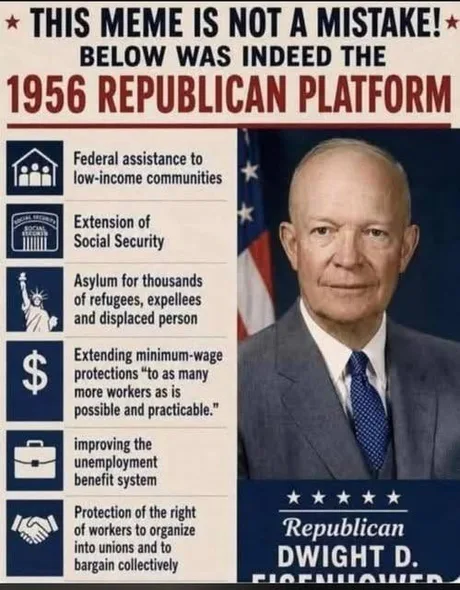
You believe in an authoritarian state. Yes it would be authoritarian if you install a dictator. It doesn’t matter how communist the state is. Like, that’s your whole mo.
You trust in the dictatorship of capital, and it has convinced you to worship at its feet.
Riddle me this. When the USSR collapsed and the state assets were sold off to private entities. Who were those entities?
Did you reply to the wrong comment?
https://en.wikipedia.org/wiki/Shock_therapy_(economics)
You did not answer my question.
https://en.wikipedia.org/wiki/Privatization_in_Russia
I don’t understand your point. The process of privatization had terrible results. It was managed by pro-capitalists and facilitated the corruption and rise in mafia power.
https://en.wikipedia.org/wiki/Anatoly_Chubais
https://en.wikipedia.org/wiki/Yegor_Gaidar
My point it was transfered exactly to the people already in positions of power…
That’s what happens when you have liberals in charge of reforming the economy. And the results really speak for themselves.
But they were ‘elected’ by the communist party… how can they be liberals?