Exclusive: Nigel Farage is a ‘spectre’ impeding the UK’s recovery from Brexit, which has cost the UK £3,000 per person every year, Professor Nick Bloom says
And suffocating your exports as a part of it. Your leadership is obsessed with natural gas, pretending it’s cheaper than renewables (blatantly false). Your national security laws are unhinged enough to threaten export of IT related services due to the jurisdiction. Your creative industry can’t reach into EU as easily anymore, many artists don’t tour internationally anymore.
The numbers range from about 3% to 8%. “The fact that it is harder to trade with the EU is about half the hit, in line with previous forecasts,” says lead author of the NBER research, Nick Bloom.
He attributes the rest to the consequences of what at times felt like near-nightly political meltdown during the Brexit negotiations. "The other half is the uncertainty from the fact the Brexit process itself was such an enormous mess… We can never get that second 4% back
We estimate that investment was reduced by 12% to 13%, employment by 3% to 4% and productivity by 3% to 4%. These negative impacts reflect a combination of elevated uncertainty, reduced demand, diverted management time, and increased misallocation of resources from a protracted Brexit process
Considering all of the evidence, the consensus view – that Brexit’s economic impact would be negative and
large – has been borne out. The 2019-2024 parliament raised taxes by around £100 billion, and if we take the
OBR’s 4 per cent loss of productivity to be the true figure, £40 billion of those tax rises were needed because of EU withdrawal.
Using a synthetic control approach, the researchers compare each UK area’s actual economic path with a data-driven counterfactual: how that area might have evolved had Brexit not happened.


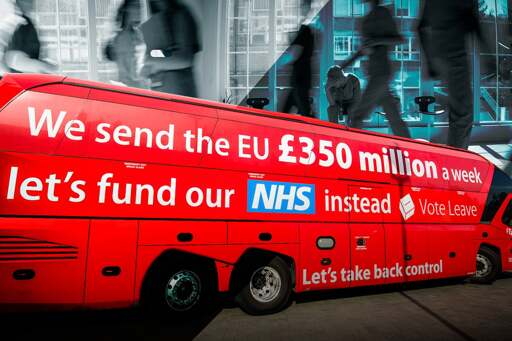
Lol. That’s the same for any country
It’s quite another thing when you’re paying a ton more fees on imports, paying more for less in industries where foreign workers stopped coming, etc.
Not really. Our economy is 80% services. High margin, high value, and low carbon.
And suffocating your exports as a part of it. Your leadership is obsessed with natural gas, pretending it’s cheaper than renewables (blatantly false). Your national security laws are unhinged enough to threaten export of IT related services due to the jurisdiction. Your creative industry can’t reach into EU as easily anymore, many artists don’t tour internationally anymore.
https://www.bbc.com/news/articles/cyv0m164m84o
https://www.nber.org/papers/w34459
https://consoc.org.uk/wp-content/uploads/2025/06/The-Economic-Impact-of-Brexit.pdf
https://warwick.ac.uk/fac/soc/economics/news/2026/6/new_research_maps_the_regional_cost_of_brexit_uk_levelled_down_not_levelled_up/
Synthetic counter factuals. Bullshit
Comparing growth rates and showing UK fell behind is perfectly valid and you’re still ignoring the imposed costs and proof of harmed industries
It would be perfectly valid if they used the actual data and not synthetic counter factuals.
And it’s the net that matters, dirty goods trade has been replaced with clean services.
Ah yes loss of dirty music tours, etc
That’s a service export. And the EU offered to include it in the deal but the Tories said no.