

14·
13 days agoI find it sad how the author needs to repeat that they aren’t pro-Russian. It clearly hasn’t deterred downvoters.

‘Lemmygrad’s resident expert on fascism’ — GrainEater, 2024
‘The political desperadoes and ignoramuses, who say they would “Rather be Dead than Red”, should be told that no one will stop them from committing suicide, but they have no right to provoke a third world war.’ — Morris Kominsky, 1970
I find it sad how the author needs to repeat that they aren’t pro-Russian. It clearly hasn’t deterred downvoters.

When I was at Tishʻa Bʼav service a few hours ago, the Rabbi made no mention of the pogroms of 1917–1923 (but did mention the 1929 Hebron massacre as well as the Oct. 7th incident). When I asked him after the service why he omitted these events, he justified it on the grounds that mentioning every anti-Jewish atrocity would have taken too long. I then said that that era was very significant, and he brushed it aside saying that Tishʻa Bʼav is mostly about the destruction of the Temple anyway. (Although the service spent only a little time on the Temple.)
I know that asking for some recognition of the Palestinians—beyond mentioning the ‘Arabs’ behind the Hebron massacre—would have been an ‘outrageous’ demand, but I would have at least expected the clergy to mention the largest anti-Jewish massacre before the 1940s. I sent the Rabbi an email about the subject, but as I was rushing I carelessly left in the part where I wrote, ‘While most Herzlians insist that the Shoah was so unique that it was incomparable to anything else in history, it would be utterly baffling if they explicitly included this catastrophe as something else incomparable to the Shoah, which is possibly another reason that they almost never discuss it.’ If he ever reads that email then I get the feeling that he is not going to take that comment lightly; it would be so typical for me if I received an extreme reaction.
I can’t say that I was satisfied with the service, but oh well; it wasn’t for me. If it makes somebody sleep easier at night, good for them.
ETA: The Rabbi replied to my email with this:
Thank you for sharing. I am not sure I would call it a photo-shoah, but it was certainly part of the larger history of anti-Jewish violence in Europe. And you are right, it deserves more attention.
I’m surprised that he overlooked my potshot. Maybe he was unsure how to interpret the word ‘Herzlian’.
Somebody was a little unhappy with your observation.
I wonder if they would have hesitated to screenshot your comment if you included URLs refuting Trump’s purported Russophilia.
Care to explain?
I want to take this moment to explicitly thank the Jewish community for inspiring me to do the research that I do, even when it seems very tangential to the Shoah. In certain ways, it would have been easier for Jews to try to put their tragedies behind them (if such a thing be possible), but they have a long tradition of keeping memories alive through commemorations such as Tishʻa BʼAv, Pesach, Chanukkah and so on. While I have several other reasons for researching it, I truly doubt that I’d be here explaining Fascism’s history to others if no-one endeavored to keep the Shoah’s memory alive. So to the Jewish people for inspiring me through their sumud and commemorations, I just want to say ‘thanks’.
Presently I am thinking about authoring a quiz on Fascism.
Does anybody know of a good website for designing quizzes? (Preferably nothing Google-related.)
huh??? whats capitalism gotta do with climate change???
Let’s be real: CUFI does not get nearly enough hate.
On RevLeft there used to be a regular called ‘pileofdeadnazis’, and unforgetting that made me realize… I simply don’t have the sincere, visceral hatred for militant anticommunists that I once had. They’re still nuisances, of course, but I don’t feel that same emotionally draining hatred for them anymore. I remember nine years ago feeling a macabre sense of satisfaction in seeing photographs of Fascist corpses, but now I feel barely anything at all. It’s mostly the same indifference when I play Zombie Army Trilogy (save for a few slow-motion death sequences): it feels less like sweet revenge and more like another job that needs getting done.
I feel like I should despise militant anticommunists more than I do, but I don’t. Even hearing about an IOF war criminal committing (say) child abuse doesn’t make me think something along the lines of ‘I want to fucking strangle these pukestains’ but more along the lines of ‘hmmf, typical.’ I don’t know if it’s my depression or naturally mellowing out or what, but it is a shift that I’ve noticed; I am almost nostalgic for the times when I was angrier.
I am thirty-two-years-old today and I could hardly feel less enthusiastic.
A couple days ago I told somebody in my state that I feel lonely and she replied, ‘I hope you find ways to be less lonely.’ I can only guess that that was her way of saying that she’s still too busy to spend any time with me.
Discord is of little help. Almost everybody is either too busy to speak with me or finds it hard to connect with my interests. I tried returning to Feddit but they shadowbanned me and are obstinately ignoring my appeals.
I was so desperate for contact that I played Zombie Army Trilogy online for a few hours. It helped slightly but the other players were really quiet. I had to quit because it was making my hand smart.
I keep wishing that I never existed, but I know that some things would be worse off without me and I would piss a lot of people off if I did something to disappear prematurely.
It feels like almost nothing is getting better.
Drink plenty of water. I don’t know what your height and weight are, but I told Aria mine and Aria recommended that I drink at least 7.4 bottles of 16.9 fl. oz. daily. I’ve become less tired… for the most part. Also, I am cutting back on the fizzy water that I drink. It used to be monstrously excessive—about four litres daily—but now it’s slightly over two liters (which is still excessive but an improvement at least).
Critical British press coverage of German veteran reunions even drew condemnation from Bonn. On July 30, 1951 the conservative Daily Telegraph reported that at a recent reunion in Düsseldorf by former paratroopers, headed by General Ramcke, the general had demanded the “immediate cessation and removal of slanders and discrimination against those who risked their lives for their country,” as well as the release of “so-called German war criminals.”
More controversially, according to the Telegraph, Ramcke added, “Whether we want to or not, we shall not be able to avoid taking up arms for the defence of our living space (Lebensraum) against enemy hordes.”³⁴ The West German newspaper Mittag condemned British reporting on this speech, describing the reunions as “harmless and understandable demonstrations.” The Telegraph unapologetically suggested, “So far as can be ascertained here, the General’s reference to ‘Lebensraum’ was suppressed by the entire German Press.”³⁵
(Source.)
The decline of violence in discussions of the North Africa campaign, as well as the presence of North Africans themselves over the course of the 1950s, occurred alongside a greater emphasis on the German colonial empire of decades past.
Articles, stories, and narratives in Die Oase drew increasing connections between Afrika Korps veterans’ experiences of the Second World War in North Africa and those of earlier colonial soldiers elsewhere on the continent, particularly German Southwest Africa.
The increasing prominence of explicitly colonial experiences, particularly in what is now Namibia, operated in several interconnected ways. On the one hand, colonial narratives normalize the extraordinarily brutal and demoralizing combat waged in North Africa during the Second World War, subsuming the experience instead into a type of post-colonial nostalgia,²²⁵ and white, European, colonial solidarity.²²⁶
On the other, they obfuscated the murderous violence of German colonial warfare, which involved mass murder in both Southwest and Southeast Africa.²²⁷ The violence in these narratives, as it appeared, served to discursively unite the new European allies over a shared British and German colonial past.
(Source.)
I was listening to this song as I was preparing this topic.
It feels strangely fitting.
I know that this is technically true but I still could not help but laugh out loud upon reading it.
I decided to finally make another Feddit account so that I could share some of my findings with the userbase there. I make one topic with three DOI(!) links and their system shadowbans me. It’s been five days and they haven’t unbanned me even though so far I have appealed the shadowban thrice… what a horribly designed system. Maybe this was a sign from Providence that I should not have bothered making another account.
Apartheid states blow dirty balls.
The Tanakh often depicts G-d as cruel because nature is often cruel. Floods, pain, droughts, &c.: these cruelties came from nature, and for the ancient Jews nature and G-d were synonymous. It is true that there are no verified records of, say, somebody turning into salt, but to the ancient Jews such a misfortune would not have sounded entirely out of character for nature either.
The capitalists were interested in space flight but only as a means to belligerent ends. MW 18014, the first handmade object to reach outer space, was something that Axis scientists and their neoslaves designed as a weapon of war. Later, Imperial America’s dictatorship of the bourgeoisie wanted space flight so that it could spy on the Soviets (allegedly in case they launched a ‘surprise attack’ on Imperial America):
Eisenhower did, in fact, have an informed grasp of the power of space flight and a clear vision of its exploitation, but his was not a romantic vision of exploration and space travel. His eye was on spy satellites, with which he hoped to establish continuous surveillance of the Soviet Union and thus ward off the possibility of a surprise attack on the United States.
Presently, many Westerners dismiss the space race as a series of vanity projects. The knowledge that Sputnik was a relatively ‘primitive’ satellite has bolstered this notion. But without satellites, telecommunication as we know it would cease to exist. It would be a nightmare for almost any moderner.





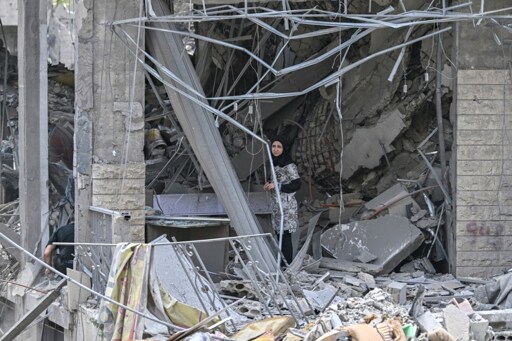

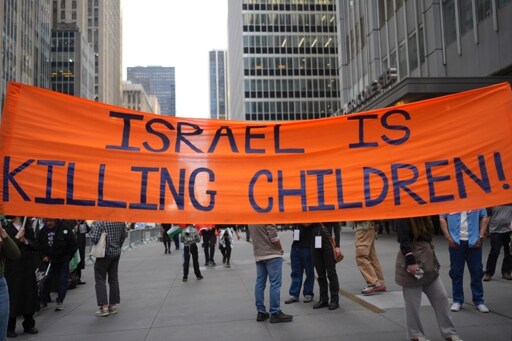


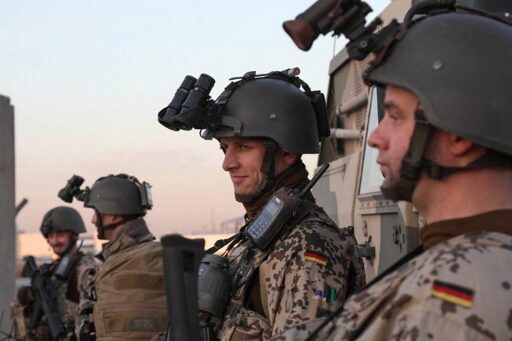



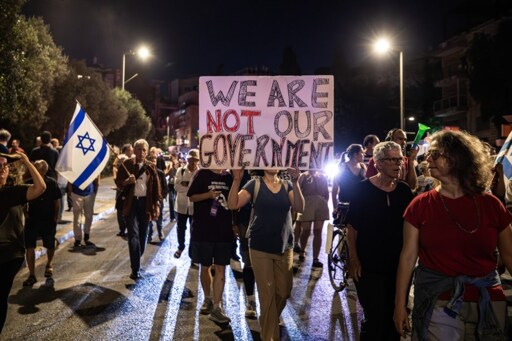


To be honest, I’d rather have conversations with these types than the neoliberals whose mindset is just ‘RUSSIA BAD, UKRAINE GOOD’. ‘Both sides are bad’ is usually not a good take either, but it does not have to be a barrier to conversation.