

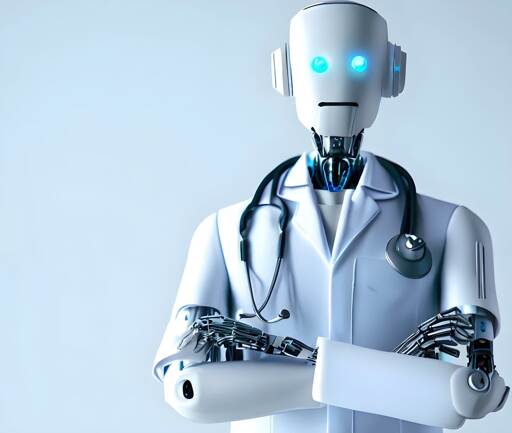
Being a doctor is one of the jobs expected to be least at risk from AI replacement. But a new program launched in Utah is raising questions over that assumption. A healthcare startup will begin offering AI examinations and prescriptions to patients without direct human oversight, making Utah the first state to replace a doctor with an AI.
The good news is that the program is currently very limited in its scope. It’s just one year long and only for patients with mild-to-moderate acne.
The process works when a person signs up for Nolla Health’s $4.99-per-month app and uses it to scan their face. After completing a medical history and personal information form, the AI analyzes their skin, identifies the acne problem, rates the skin’s oiliness, and then generates a numerical acne severity score that ranges between clear skin and severe acne, reports Bloomberg.
OK, it is clear you have not built one of these and that’s OK.
The AI doesn’t “know” what acne is, it doesn’t “know” things like you and I do. It can theoretically identify it uniformly if it’s training data is uniform but, overwhelmingly, that is not the case.
Case in point. Acne on dark skin looks different from acne on light skin. If the model is trained like facial recognition software (which it certainly will be) then it will perform comparably. That is, it will consistently misdiagnose for people of color the same way facial recognition flags people of color incorrectly.
AI is, honestly, more biased than humans are as we can self identify our own bias which has shown to largely eliminate it. AI is not self-aware, it can’t self correct like we can.
EDIT: This also doesn’t address my core point that we should not want to offload cognitive work, we should seek to train our knowledge workers better so they can produce better outcomes.
That’s an assumption. It’s also an assumption that the model would misdiagnose open sores and lesions on one type of skin vs another. Facial recognition software, the ability of the model to tell different people apart, is a hell of a lot different than identifying the mere presence of open sores and oil.
Did you even read the article?
Again I say, this is a limited use-case, in which a very easy diagnosis can be attained through imaging equipment. We have a limited number of doctors, they can be utilized more effectively instead of dealing with a bunch of pimple-faced teens.
I am beginning to grasp where this misunderstanding is coming from.
You are claiming that the process a CNN used in computer vision would go through in order to identify acne is different than facial recognition.
It is not. The only difference is what the y axis of the training data is, the compression of the data through an encoder layer, the subsequent re-expansion, all of that is identical and it is precisely what leads to bias.
I did read the article, reading the article is what enabled me to come to this conclusion.
Furthermore, the company doing this certainly didn’t build an entirely novel CV architecture for this task. They are likely using one of the already existing models along with already existing training data to fine tune it. This only increases the probability of bias.
To your point about limited doctors. That problem is entirely self inflicted. The US deliberately keeps the number of doctors low. This is what I mean about equipping existing knowledge workers with the skills to more effectively do their jobs. Offloading cognition to AI has long term ramifications that its benefits simply do not compensate for in ways that couldn’t be achieved more productively.