

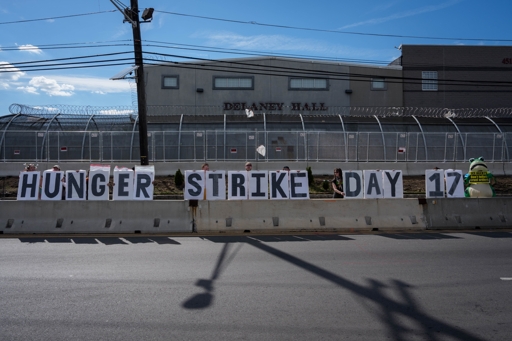
A newly surfaced federal filing confirms ICE force-fed a hunger-striking detainee, as strikes, solitary confinement, and deaths climb across the detention system.
A little-noticed internal filing from ICE’s Health Service Corps has done something no press release ever has: it puts in writing that a detainee who stopped eating was subjected to involuntary medical treatment under the current administration. Covering the opening quarter of fiscal year 2026 and first surfaced by the Guardian, the document describes one unnamed patient — who began refusing meals sometime between October and December — as having been “subject to force feeding, hydration, or forced urinary catheterization, or involuntary blood draws.”
Elsewhere in the paperwork, ICE reports seven people were still on hunger strike as of mid-February, and the agency earmarks close to $169,000 in outside medical costs tied to strikers for the full fiscal year.
…
This confirmation lands in the middle of a year marked by unrest inside detention facilities nationwide. The biggest flashpoint came at New Jersey’s Delaney Hall, where nearly 300 detainees walked off work assignments and refused meals from late May into June, citing rotten food and unmet medical needs — a protest that wound down, Prism Reports found, only after participants said they faced retaliation for speaking out.
Pennsylvania’s Moshannon Valley Processing Center saw its own meal refusals that same spring, after a medical scare that one detainee’s lawyers say led to his being placed in solitary and later transferred out of state. At California’s Adelanto facility, attorneys with the Immigrant Defenders Law Center say strikers there were bound with zip ties, warned they’d face tear gas, or moved into isolation — even as officials denied that anyone at the facility was refusing food at all.
…
The force-feeding revelation surfaced not long after ICE quietly posted a fuller batch of detention figures on July 20 — its first release in three months, following a blackout that had already drawn lawsuits over transparency. Digging through those numbers, the Daily Beast’s own investigative arm, Punchup, calculated that the most medically fragile detainees on record — those flagged for serious illness, hunger strikes, or suicide watch — averaged 63 straight days in solitary confinement over the winter quarter, more than quadruple the length the United Nations treats as a warning sign for torture.
U.N. human rights chief Volker Türk had already sounded a related alarm weeks earlier. Extended isolation, he said, “could amount to cruel, inhuman or degrading treatment.” Separately, he suggested that conditions inside ICE custody cast doubt on whether the recent run of deaths there was avoidable.